Market Entry / Norway
Entering theNorwegian market
Norway is closely connected to the Nordic region, but market structure, geography, regulation and routes to market can make local knowledge important.
Market guide
01
Norway as a market
Norway is a small market by population and a substantial one by purchasing power. For most international suppliers that combination sets the commercial logic: volumes are moderate, price sensitivity is often lower than in larger European markets, and buyers tend to weigh total cost — service, availability, documentation, lifetime — rather than unit price alone.
Demand is concentrated in a few urban regions, principally the Oslo area, with further clusters around Bergen, Stavanger, Trondheim and Tromsø. Several of Norway's most active industrial buyers, however, sit well outside those cities: energy, maritime, seafood, process industry and construction activity is distributed along a long coastline. A channel plan built only around Oslo will reach the head office and miss the site.
Norway also has a large public sector and significant public procurement. If your customers include municipalities, health trusts, or state-owned enterprises, tender processes and documentation requirements become part of the entry question rather than an afterthought.
The similarity with the rest of the Nordics is real but partial. Business norms travel well. Currency, price levels, wage structure, regulation, distribution ownership and buying networks do not. Treat Norway as a market that resembles its neighbours rather than as a region of one of them.
02
Norway is not simply another EU market
Norway is not a member of the European Union. It participates in the internal market through the European Economic Area agreement, which means much EU product legislation applies and a great deal of commercial practice is familiar. Norway is not part of the EU customs union, and it has its own currency, the Norwegian krone.
In practical terms, goods moving between the EU and Norway pass a customs border. That affects paperwork, VAT handling, incoterms, freight routing and lead times — and it affects who in your channel is willing and able to act as importer of record. Many entry problems that appear to be sales problems begin here.
Sector-specific requirements vary widely. Food, beverages, alcohol, chemicals, medical devices, machinery, construction products and electrical equipment each carry their own approval, labelling and documentation regimes, and some sectors have national arrangements on top of EEA rules.
NORDICS is a connection and discovery platform, not a legal, customs or tax adviser. Customs classification, VAT registration, product compliance and contractual matters should be confirmed with qualified professional advisers and the relevant Norwegian authorities for your specific product.
03
Routes to market
Five routes cover most entries into Norway. They are not mutually exclusive: a common pattern is direct sales to a small number of large accounts alongside a distributor for the broader market.
| Route | Typically suits | Main trade-off |
|---|---|---|
| Direct sales | Few, large, identifiable customers; high-value or highly technical products | Full control and margin, but you carry cost, credit, logistics and local presence |
| Distributor | Products needing stock, coverage, service and many customer relationships | Fast access to an existing network, at the cost of margin and direct control |
| Sales agent | Products where you want to keep the customer relationship and invoice directly | Lower cost and retained ownership, but limited capacity and no local stock |
| Local representative | Testing a market, or supporting an existing channel | Low commitment, low leverage; rarely sufficient on its own |
| Local subsidiary | Proven demand, service obligations, public tenders, long-term commitment | Highest control, highest fixed cost and administrative load |
The right choice depends on the product itself, the sector, how concentrated your customers are, how much service and technical support the product requires, how demanding the logistics are, and how long and complex the sales cycle is. A product with ten realistic buyers and a twelve-month sales cycle rarely needs a distributor. A product with four hundred buyers, stock expectations and a service obligation almost always does.
04
Distributor or direct sales?
This is usually the live question, and it is worth resolving honestly before approaching partners. A distributor is not a shortcut around commercial work; it is a decision to buy an existing network and accept less control over how your product is sold.
A distributor may make sense when
- Customers are numerous and dispersed
- Local stock and short lead times are expected
- Installation, service or spare parts matter
- You need credible local references quickly
- Your own sales capacity in the region is limited
Trade-offs
- Lower control over positioning and price
- Margin shared with the channel
- Dependency on one partner's priorities
- Risk of channel conflict with direct accounts
Neither route is universally better. The more useful question is which risk you would rather carry: the cost and slowness of building presence yourself, or the loss of control and visibility that comes with selling through someone else's organisation.
05
Geography and logistics
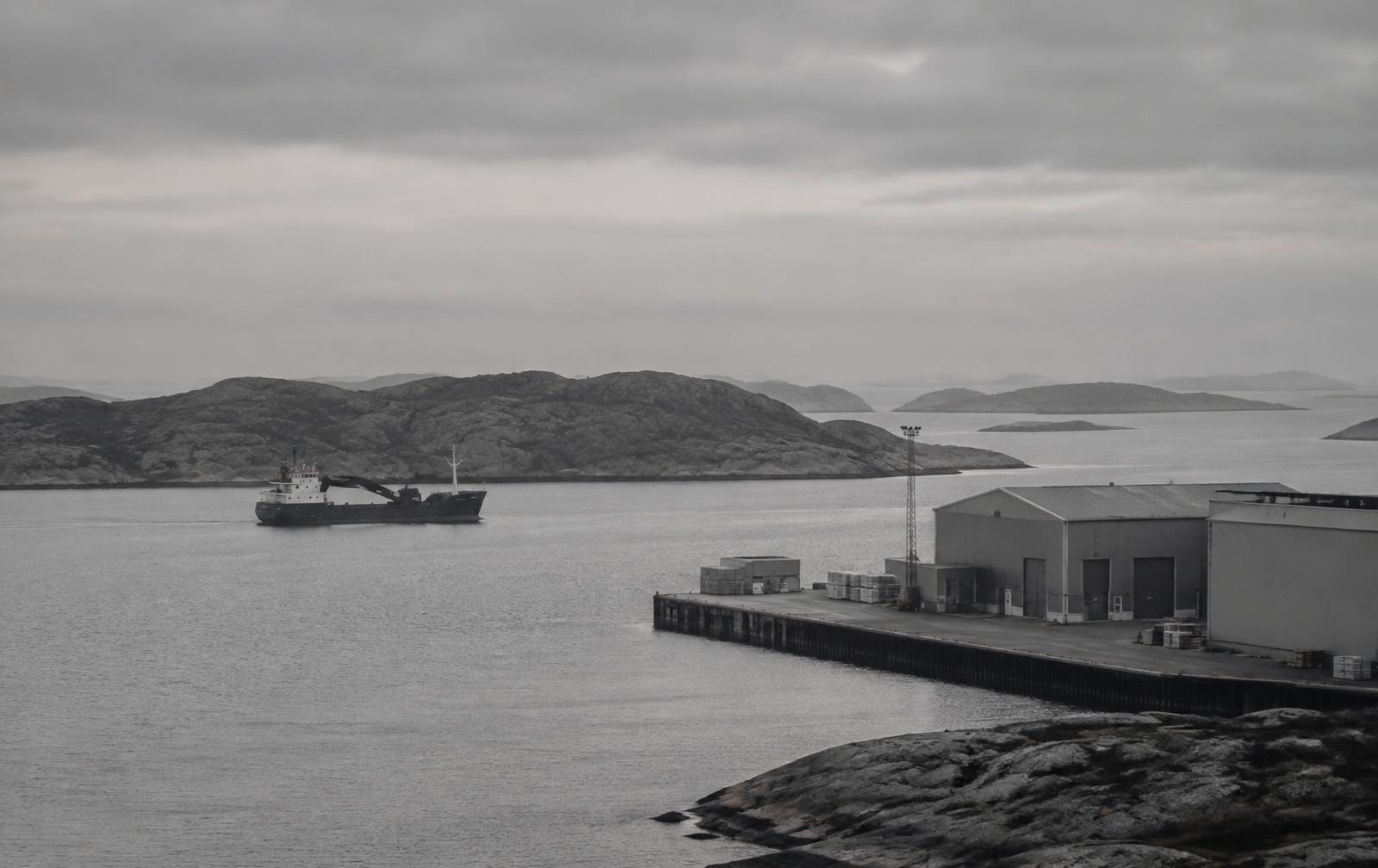
Norway's shape is a commercial fact, not scenery. The country is long, mountainous and coastal, with a significant part of its industrial activity far from the capital. That has direct consequences for how you price and promise.
- Transport: road, coastal shipping and air all appear in normal domestic distribution; the cheapest route is not always available in winter.
- Lead times: next-day delivery around Oslo and three-day delivery to a northern site can both be normal, and customers know the difference.
- Warehousing: a single central warehouse simplifies stock but can weaken service in the west and north.
- Service coverage: technical support that exists only in Oslo is not national coverage, whatever a partner's map suggests.
- Cost to serve: freight and service costs vary enough by region that a single national price list can quietly erode margin.
When evaluating a partner, ask where their stock actually sits, which regions they serve weekly rather than occasionally, and what they charge to reach the places your customers are.
06
Business culture
Norwegian commercial culture is unremarkable once you are inside it, and easy to misread from outside. A few themes matter in practice.
- Communication is direct and fairly informal; plain answers are preferred to enthusiasm.
- Preparation is noticed. A well-prepared first meeting carries further than a polished one.
- Organisations are relatively flat, and the person in the room often has real authority — but consults widely before deciding.
- Promises are taken literally. An over-committed delivery date damages credibility more than a longer honest one.
- Trust accumulates slowly and then holds. Decisions may take time; relationships tend to last.
- Silence after a meeting is usually process, not rejection. A short, factual follow-up is normal and welcome.
07
Common entry mistakes
- 01Treating the Nordics as one market and Norway as an extension of Sweden, with one partner, one price list and one plan.
- 02Choosing a distributor because they are large, rather than because your product would matter inside their portfolio.
- 03Underestimating geography, and discovering the cost to serve the west and north after the price list is fixed.
- 04Leaving the channel strategy unclear, so direct accounts and partner accounts collide within the first year.
- 05Skipping partner due diligence — ownership, financial condition, portfolio conflicts and real coverage.
- 06Expecting immediate sales in a market where procurement cycles, references and trust take time to build.
- 07Failing to define who owns the customer relationship and the data, which only becomes visible when the partnership ends.
08
When a local partner can help
A local partner is worth involving when the gap is knowledge or access rather than effort: when you cannot yet name the twenty customers that matter, when a channel already controls the route to them, when local stock or service is a condition of being considered, or when a public tender requires a Norwegian counterpart.
A local partner is not the answer when the product has not been validated anywhere, when the commercial case depends on the partner creating demand that does not exist, or when you are unwilling to invest in the market after the introduction is made. Partners notice that quickly.
Enter the Nordics
Looking North?
If you're evaluating Norway and looking for distribution, sales representation, logistics or relevant local connections, tell us what you're looking for.
Sources / further reading
Norwegian Customs (Tolletaten)
Import procedures, classification and documentation.
Norwegian Tax Administration (Skatteetaten)
VAT registration and reporting obligations.
Brønnøysund Register Centre
Company registration data for partner due diligence.
Statistics Norway (SSB)
Official market, trade and population data.
EFTA / EEA information
How the EEA agreement applies to goods and services.
NORDICS is a connection and discovery platform. Nothing on this page is legal, tax, customs or regulatory advice; confirm requirements for your product with qualified advisers and the relevant authorities.